- A+
Рухавік - гэта сэрца аўтамабіля, і радыятар яго "кандыцыянер." Гэта вельмі важна для падтрымання стабільнай тэмпературы рухавіка. Асноўныя радыятарныя тэхналогіі, прадстаўленыя ў цяперашні час на рынку, у асноўным дзеляцца на дзве катэгорыі: механічны радыятар і паяны радыятар.
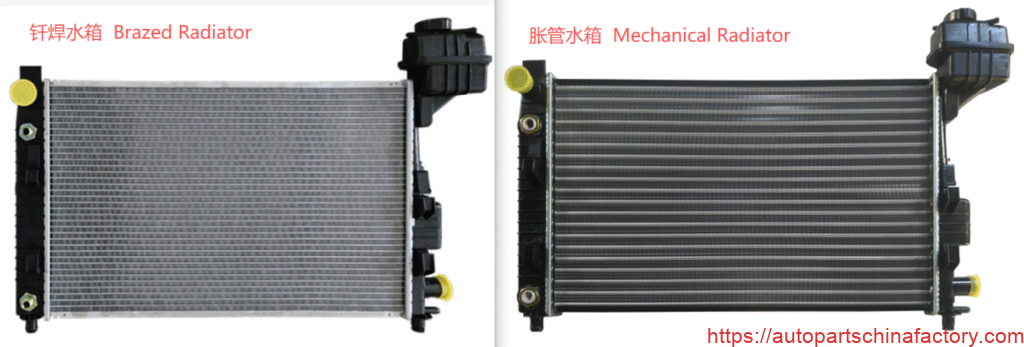
What are the differences between these two types of radiators? Які з іх лепш падыходзіць для вашага аўтамабіля або патрэб вашага бізнесу?
У гэтым артыкуле будзе дадзены глыбокі аналіз з пункту гледжання атрыбутаў прадукту, performance, lifespan, і сусветныя тэндэнцыі.
?️ Product Attribute Comparison: Механічны супраць. Brazed
| Attribute | Механічны радыятар | Паяны радыятар |
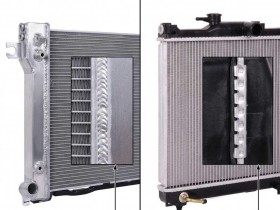
| Appearance/Structure | Connected using a mechanical expansion process; the contact point between the tubes and fins often has a slight crimp or bulge. Side tanks/end plates are typically plastic or sealed with rubber gaskets. | Connected using the brazing process; трубкі, fins, and tanks are integrated into one piece (metallurgical bond). The structure is tight, and seams are smooth. Mostly all-aluminum or all-copper structures. |
| Joining Material | Rubber gaskets, plastic/nylon end tanks (PA66+GF). | Brazing alloy (Нап., aluminum-silicon alloy), achieving a metallurgical bond. No gaskets. |
| Primary Material | Aluminum core + Plastic End Tanks (PA66+GF). | Aluminum core + Plastic End Tanks ; All-Aluminum or All-Copper. |
| Manufacturing Process | Mechanical expansion, where tubes expand to press against fins; tanks are secured with bolts/clamps. | High-temperature vacuum or atmosphere brazing, fusing the core components together. |
| Service Life | Gaskets are prone to aging and plastic tanks can become brittle, leading to a relatively shorter lifespan (5-8 years or less). | High structural integrity, strong pressure resistance, good vibration resistance, leading to a relatively longer lifespan (8-15 years or more). |
| Cooling Performance | Heat transfer between fins and tubes is not a metallurgical bond, resulting in slightly lower efficiency; performance is relatively moderate. | Brazed connection provides excellent thermal conductivity and high heat transfer efficiency; cooling performance is superior. |
| Pressure Endurance | Limited by the plastic tanks and gaskets, pressure resistance is weaker. | All-metal structure, offering very strong pressure resistance, suitable for high-load engines. |
| Weight | Typically lighter than all-aluminum brazed radiators due to the plastic components. | All-metal, relatively heavier, but new thin-walled brazed radiators have significantly reduced weight. |
| Рамонтапрыдатнасць | Easy to disassemble and replace tanks or gaskets; repairability is relatively good. | Damage often requires complete replacement; difficult to repair (requires professional brazing). |
| Price | Lower production cost, typically больш даступным. | Complex manufacturing process and higher material costs result in a relatively higher price. |
? Global Trends and Market Analysis
The global choice of radiators by automakers and the aftermarket reflects a trade-off between cost, performance, and lifespan:
1. Market Position of Mechanical Radiators
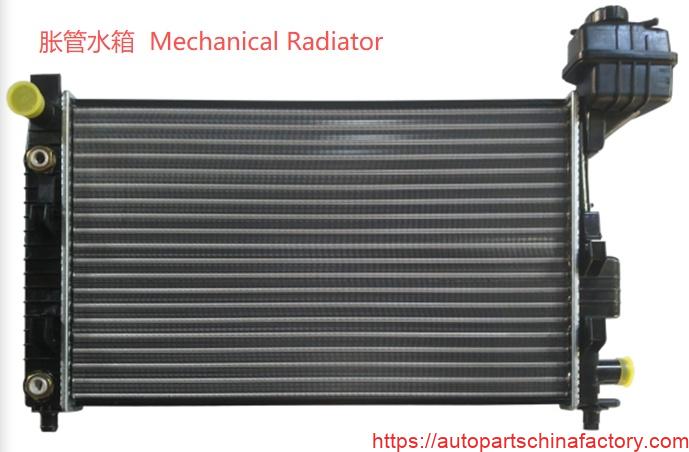
- Popular Regions/Vehicle Types: Due to their advantages of low cost і lightweight design, mechanical radiators dominate the entry-to-mid-level economy car і passenger vehicle market. They remain the mainstream choice in most Original Equipment (OE) markets across Asia, Europe, and North America.
- Reason for Popularity: The introduction of plastic tanks has significantly lowered both cost and weight, meeting the needs of most cars for cost control і fuel efficiency. Their cooling performance is sufficient for vehicles operating under relatively moderate engine conditions.
2. Market Position of Brazed Radiators
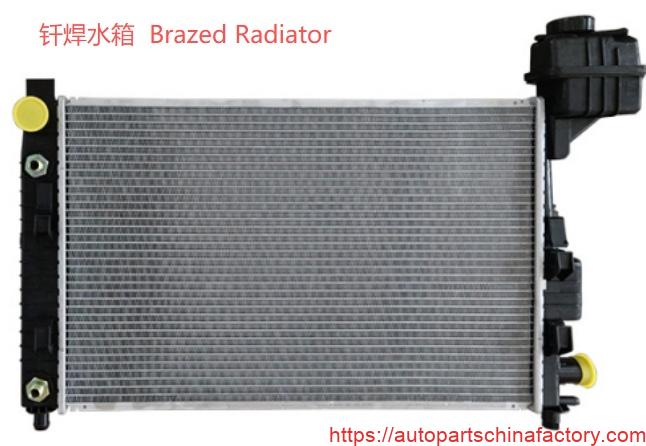
- Popular Regions/Vehicle Types: Brazed radiators are primarily used in high-performance sports cars, luxury vehicles, heavy-duty trucks, construction machinery, and the aftermarket for high-load or modified vehicles.
- Reason for Popularity: All-aluminum brazed radiators offer outstanding cooling efficiency, excellent structural strength, і high-pressure resistance. Their stability, reliability, and long lifespan make them indispensable under high thermal loads and severe operating conditions (such as off-roading, racing, or heavy hauling).
- All-copper/brass brazed radiators (popular in older models) are still favored by some repair markets for their superior repairability and thermal conductivity.
? Summary of Similarities and Differences
Similarities
- Basic Function: Both circulate coolant to use air convection to dissipate excess heat generated by the engine, ensuring the engine operates within the optimal temperature range.
- Core Structure: Both include the three essential components: Tubes, Fins, і Tanks.
- Main Material: Modern automotive radiators are predominantly made of aluminum due to its lightweight and good thermal conductivity.
Differences
| Feature | Advantage of Mechanical Radiator | Advantage of Brazed Radiator |
| Cost/Price | Affordable price, high cost-effectiveness. | Though higher priced, a longer lifespan and better performance offer better long-term value. |
| Structure/Joints | Convenient for assembly and high-volume mass production. | All-metal metallurgical bond, the structure is seamless, robust, and corrosion-resistant. |
| Performance/Life | Clear advantage in lightweight design. | Higher cooling efficiency, more resistant to high pressure, and a longer service life. |
Выснова: How to Make Your Choice?
Choosing between a mechanical and a brazed radiator depends on your needs and budget:
- ✅ Choose the Mechanical Radiator if:
- You are looking for the lowest procurement cost.
- Your vehicle is an entry-to-mid-range commuter car, driven in mild conditions, with no extreme cooling requirements.
- You require a lightweight solution.
- ✅ Choose the Brazed Radiator if:
- Your vehicle is a high-performance, turbocharged, heavy-duty, or modified model.
- You use your vehicle in high-load, off-road, or racing environments.
- You require the longest service life і best cooling performance.
Regardless of the type of radiator you choose, regular coolant replacement and radiator inspection are key to ensuring the long-term health of your engine.