Car Radiator Buying Guide: All-Aluminum vs. Aluminum-Plastic Radiator

Car Radiator Buying Guide: All-Aluminum vs. Aluminum-Plastic

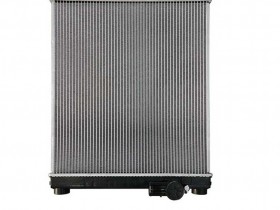
When it comes to maintaining or upgrading your vehicle's cooling system, the radiator is the heart of the operation. In the aftermarket today, you will primarily encounter two types: Aluminum-Plastic (Plastic Tank) and All-Aluminum. Aluminum-Radiator-VS-Plastic-Aluminum-Radiator Which one is right for your vehicle? This guide breaks down the materials, performance, lifespan, and costs to help you make an informed decision. 1. Materials and Construction Aluminum-Plastic Radiators Radiators This is the standard Original Equipment (OE) design for most modern passenger cars. Structure: An aluminum core (tubes and fins) crimped to plastic end tanks (usually PA66 nylon) using a rubber gasket. Design Goal:...
Read More
Radiator with Copper Oil Cooler vs. Radiator with Aluminum Oil Cooler: A Visual Material Comparison Radiator

Radiator with Copper Oil Cooler vs. Radiator with Aluminum Oil Cooler: A Visual Material Comparison

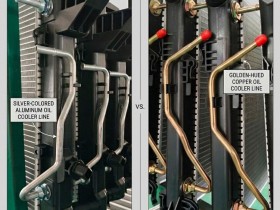
Choosing the right cooling components for your automotive inventory, fleet, or your personal DIY project can be a complex decision. Often, the choice hinges on balancing performance requirements with budget and specific application needs. At Auto Parts China Factory, we specialize in providing high-quality, factory-direct cooling solutions. To help you make an informed choice, we’ve put together this direct visual comparison of the two dominant industry standards for integrated transmission oil cooler (TOC) tubes: Copper and Aluminum. Visual Comparison: Radiator A vs. Radiator B Look closely at the image below. We have lined up two factory-fresh radiator assemblies, identical except...
Read More
APCF-99-88043: The Professional Exporter’s Choice for Peugeot & Citroën Cooling Mechanical Radiator

APCF-99-88043: The Professional Exporter’s Choice for Peugeot & Citroën Cooling

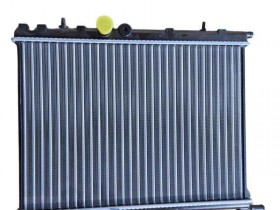
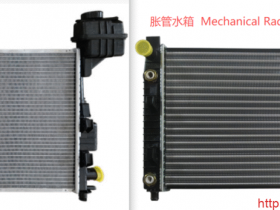
APCF-99-88043: The Professional Exporter’s Choice for Peugeot & Citroën Cooling When sourcing radiators for the European car parc, reliability and cost-efficiency are the two most critical factors. For wholesalers and distributors handling Peugeot and Citroën cooling systems, the APCF-99-88043 (Cross-Ref: NISSENS 63502) has become a global standard. APCF-99-88043-front Why the Mechanical Radiator (APCF-99-88043) is the Smart Choice In the automotive aftermarket, there is often a debate between Mechanical and Brazed radiators. While brazed units (like the NISSENS 63502A) are excellent for high-performance needs, the APCF-99-88043 Mechanical Radiator is the "workhorse" of the industry. Vibration Resistance: The mechanical expansion of the...
Read More
Mechanical vs. Brazed Radiator Technology: Which Cooler is Right for Your Car? Radiator

Mechanical vs. Brazed Radiator Technology: Which Cooler is Right for Your Car?

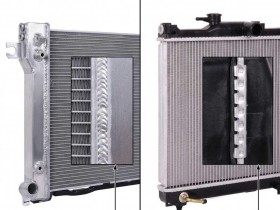
The engine is the heart of a car, and the radiator is its "air conditioner." It is crucial for maintaining stable engine temperature. The mainstream radiator technologies currently on the market are mainly divided into two categories: the Mechanical Radiator and the Brazed Radiator. Brazed-Radiator-VS-Mechanical-Radiator What are the differences between these two types of radiators? Which one is better suited for your vehicle or your business needs? This article will provide an in-depth analysis from the perspectives of product attributes, performance, lifespan, and global trends. 🛠️ Product Attribute Comparison: Mechanical vs. Brazed AttributeMechanical RadiatorBrazed RadiatorAppearance/StructureConnected using a mechanical expansion process;...
Read More
Keep Your MITSUBISHI DELICA Cool: The Right Radiator for Your 87-93 MT (OE SW600045) Brazed Radiator

Keep Your MITSUBISHI DELICA Cool: The Right Radiator for Your 87-93 MT (OE SW600045)

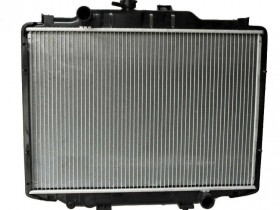
Keep Your MITSUBISHI DELICA Cool: The Right Radiator for Your 87-93 MT (OE SW600045) APCF-72001-radiator-front If you're a proud owner of a classic Mitsubishi Delica, you know how important it is to keep this legendary vehicle in top running condition. Whether you use your Delica for daily driving, family adventures, or off-road overlanding, a reliable cooling system is non-negotiable. Today, we're focusing on a critical component for your van's longevity: the radiator. Specifically, we're introducing a high-quality replacement radiator designed for the 1987-1993 MITSUBISHI DELICA with a manual transmission (MT) and the 16-valve engine. Why This Radiator is the Right...
Read More
Tube-Fin vs. Plate-Fin Radiators: Key Differences & Applications Radiator

Tube-Fin vs. Plate-Fin Radiators: Key Differences & Applications

Tube-fin radiators and Plate-fin radiators are two common types of heat exchangers, differing significantly in their structure and typical applications. Tube-Fin Radiator PA Radiator Structural Characteristics: Cooling Tubes: Primarily composed of flattened cooling tubes through which the coolant flows. Heat Dissipation Fins: Wavy or folded fins are placed between the cooling tubes, increasing the heat transfer surface area. Tanks: Typically has two tanks (either side or top/bottom) that connect the cooling tubes, forming a circulation path for the coolant. Materials: Commonly made from copper or aluminum, with components joined together using brazing or similar methods. Working Principle: Coolant (such as...
Read More
Car Radiator: The Engine's Radiator

Car Radiator: The Engine’sCooling Guardian

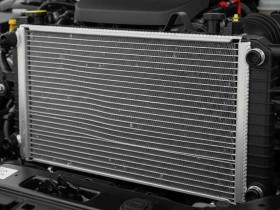
When your car's engine runs, it generates a lot of heat. If this heat isn't dissipated in time, the engine can overheat, leading to performance issues or even serious damage. This is where the car radiator plays a crucial role – it's the engine's "cooling guardian." radiator installed on car How the Radiator Works The radiator is the core component of your car's cooling system. It works through a simple heat exchange principle: Heat Absorption: Coolant (typically a mixture of water and antifreeze) is pumped through channels inside the engine, absorbing the heat generated by the engine. Heat Dissipation: The...
Read More