
- A+
When cabin heating performance begins to degrade in popular vehicle platforms like the Toyota Corolla or Lexus CT200h, the culprit is often a clogged or internally corroded heater core. As a critical component of the automotive HVAC system, the heater core is responsible for heat exchange between the engine coolant and the cabin air.
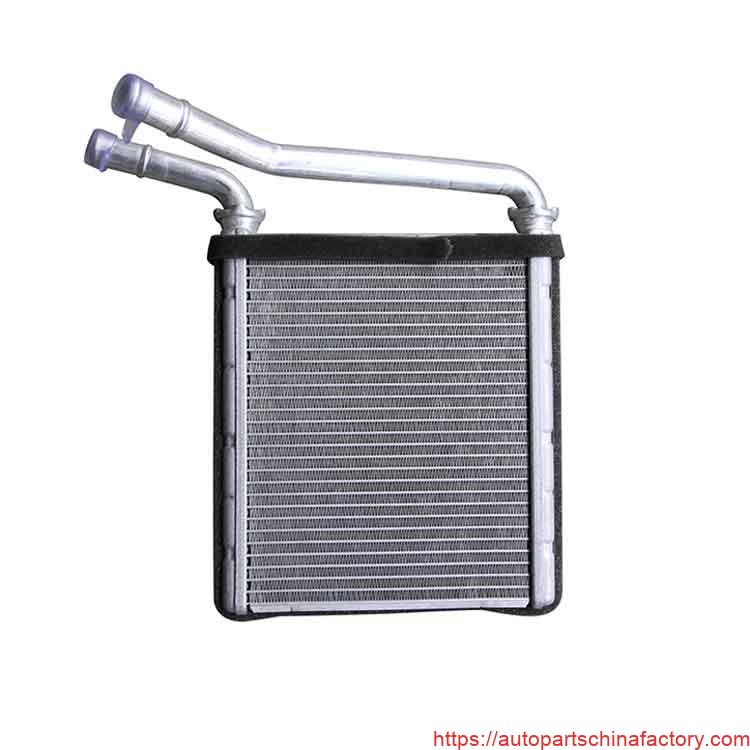
For automotive repair shops, wholesalers, and aftermarket parts importers, ensuring the use of high-quality, brazed aluminum components is essential to avoid the "comeback" of leaking or inefficient systems. Today, we are taking a deep dive into this premium brazed aluminum heater core, engineered to meet exact OEM tolerances for reliable performance.
Technical Engineering Standards
Unlike traditional solder-dipped heater cores, this unit utilizes a brazed aluminum construction process. Brazing creates a stronger, more resilient bond between the cooling tubes and the headers, significantly enhancing the unit's ability to withstand the high-pressure thermal cycling that modern cooling systems experience.
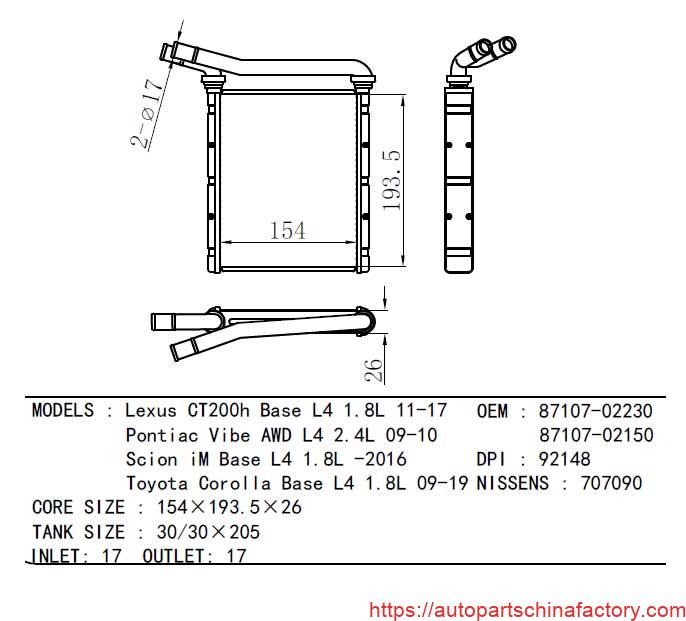
Technical Specification Overview
As detailed in the engineering schematic, APCF-62-75042-drawing, this component is designed for precise fitment in tight dashboard cavities:
| Technical Feature | Specification |
| Core Dimensions | 154 mm × 193.5 mm × 26 mm |
| Tank Size | 30 mm × 30 mm × 205 mm |
| Inlet/Outlet Diameter | 17 mm |
| Construction Material | High-Grade Brazed Aluminum |
| OEM Cross-References | 87107-02230, 87107-02150 |
| Aftermarket Benchmarks | e Nissen 707090, DPI 92148 |
Key Benefits for Aftermarket Distributors & Workshops
1. Seamless Fitment
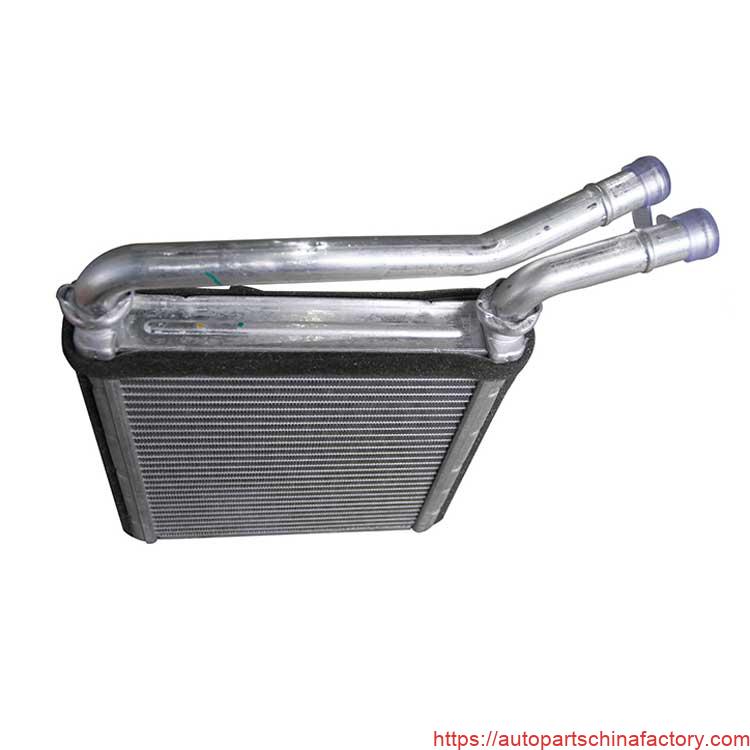
Precision engineering means this unit slides directly into the existing HVAC housing without the need for manual bending of inlet/outlet pipes or modifications to the dashboard assembly. The structural consistency is visible in the detailed view of APCF-62-75042, which shows the factory-spec alignment of the pipe geometry.
2. High Thermal Conductivity
With a 26 mm thick core and high-density fin structure, this unit effectively extracts heat from the engine coolant even in extreme winter temperatures. As shown in APCF-62-75042, the core design minimizes flow restriction, ensuring that coolant circulates efficiently to provide maximum cabin warmth.
3. Structural Integrity & Vibration Dampening
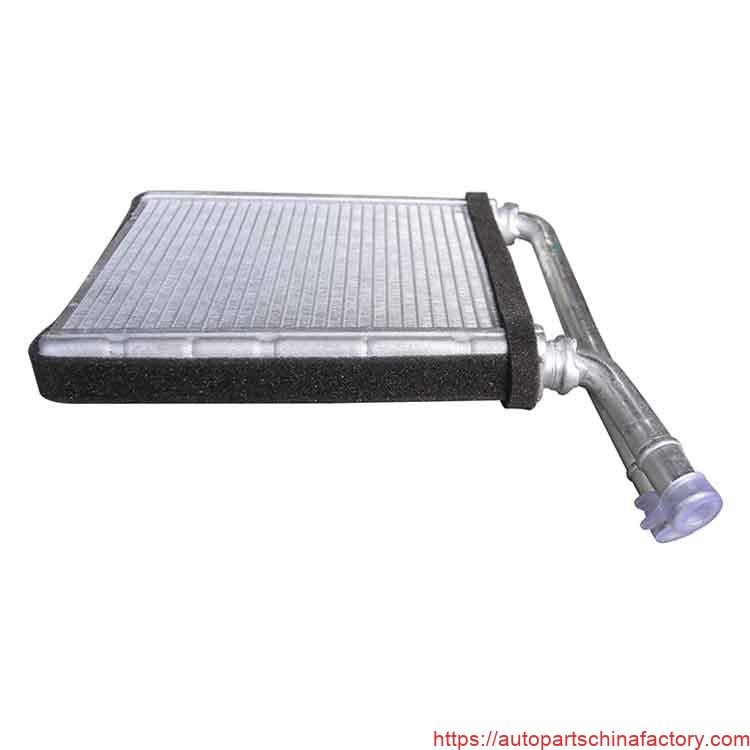
Every unit comes equipped with a pre-installed perimeter foam gasket. This is not just for air-sealing; it serves as a critical vibration dampener that prevents the aluminum core from rubbing against plastic HVAC housing components. You can see the placement of this seal in the clear shots provided in APCF-62-75042 dhe APCF-62-75042 .
Broad Vehicle Application Compatibility
This heater core covers a massive footprint in the automotive aftermarket, serving the following vehicle platforms:
- Toyota Corolla: Base L4 1.8L (2009–2019)
- Lexus CT200h: Base L4 1.8L (2011–2017)
- Pontiac Vibe: AWD L4 2.4L (2009–2010)
- Scion iM: Base L4 1.8L (2016)
Need to streamline your inventory?
Our logistics ensure that every core is packaged with reinforced stabilizers to prevent fin deformation during international transit. Contact our sales team today to request a quote or to integrate these specifications into your own parts catalog.


