Meccanico vs. Tecnologia dei radiatori brasati: Quale dispositivo di raffreddamento è adatto alla tua auto? Radiatore

Meccanico vs. Tecnologia dei radiatori brasati: Quale dispositivo di raffreddamento è adatto alla tua auto?

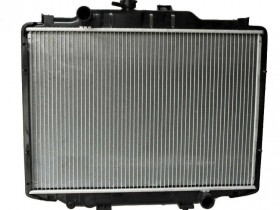
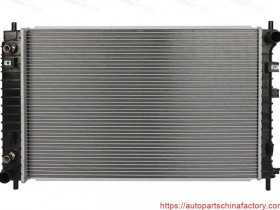
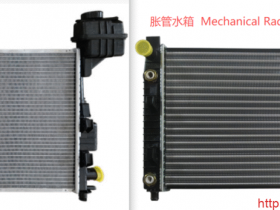
Il motore è il cuore di un'auto, e il radiatore è suo "condizionatore d'aria." È fondamentale per mantenere stabile la temperatura del motore. Le principali tecnologie dei radiatori attualmente sul mercato si dividono principalmente in due categorie: il Radiatore Meccanico e il Radiatore Brasato. Radiatore-brasato-VS-Radiatore-meccanico Quali sono le differenze tra questi due tipi di radiatori? Quale è più adatto al tuo veicolo o alle tue esigenze aziendali? Questo articolo fornirà un'analisi approfondita dal punto di vista degli attributi del prodotto, prestazione, durata, e tendenze globali. 🛠️ Confronto delle caratteristiche del prodotto: Meccanico vs. Attributo brasatoRadiatore meccanicoRadiatore brasatoAspetto/strutturaConnesso utilizzando un processo di espansione meccanica;...
Per saperne di più
Restore Cooling Power: BMW A/C Condenser with Receiver-Drier (OE 64 50 9 122 825) APCF-88-28001 Condensatore

Restore Cooling Power: BMW A/C Condenser with Receiver-Drier (OE 64 50 9 122 825) APCF-88-28001

Restore Cooling Power: BMW A/C Condenser with Receiver-Drier (OE 64 50 9 122 825) APCF-88-28001 If your BMW’s air conditioning has been losing efficiency, blowing warm air, or putting extra strain on the compressor, the culprit may be a failing condenser. The A/C condenser with integrated receiver-drier – BMW OE part 64 50 9 122 825 (6450.9.122.825) – is the direct-fit solution to bring back reliable cooling performance. APCF-88-28001-right Why This Part Matters The condenser is the heart of your A/C’s heat exchange process. When it clogs or leaks, refrigerant can’t properly cycle, resulting in weak cooling and potential compressor...
Per saperne di più
Evaporator Core for BMW 5 & 7 Series (G30/G38/G12) Evaporatore

Evaporator Core for BMW 5 & 7 Series (G30/G38/G12)

Evaporator Core for BMW 5 & 7 Series (G30/G38/G12) APCF-66-28012-side Introduction The air conditioning system in your car is essential for a comfortable driving experience. A critical but often overlooked component is the evaporator core, which functions as a heat exchanger, similar to a radiator. Unlike a radiator that cools the engine, the evaporator core works to cool the air inside the passenger cabin. It uses a circulating refrigerant to absorb heat and humidity from the air, effectively making the interior of your car cool and dry. If you notice your AC is no longer blowing cold air or there's...
Per saperne di più
Mantieni la tua MITSUBISHI DELICA al fresco: Il radiatore giusto per il tuo 87-93 MT (Tu sei SW600045) Radiatore

Mantieni la tua MITSUBISHI DELICA al fresco: Il radiatore giusto per il tuo 87-93 MT (Tu sei SW600045)

Mantieni la tua MITSUBISHI DELICA al fresco: Il radiatore giusto per il tuo 87-93 MT (Tu sei SW600045) APCF-72001-radiatore-anteriore Se sei orgoglioso proprietario di una classica Mitsubishi Delica, sai quanto sia importante mantenere questo veicolo leggendario nelle migliori condizioni di funzionamento. Sia che utilizzi la tua Delica per la guida quotidiana, avventure familiari, o overlanding fuoristrada, un sistema di raffreddamento affidabile non è negoziabile. Oggi, ci stiamo concentrando su un componente fondamentale per la longevità del tuo furgone: il radiatore. Nello specifico, stiamo introducendo un radiatore sostitutivo di alta qualità progettato per 1987-1993 MITSUBISHI DELICA con cambio manuale (MT) e il motore a 16 valvole. Why This Radiator is the Right...
Per saperne di più
Unleash Your Ride's Potential: The APCF-52259 Oil Cooler for Modified and Tuning Cars Oil Coolers

Unleash Your Ride’s Potential: The APCF-52259 Oil Cooler for Modified and Tuning Cars

APCF-52259 (5) Introduction: For those who live life a quarter mile at a time, or simply demand the absolute best from their vehicles, maintaining optimal engine oil temperature is paramount. The APCF-52259-5 oil cooler is specifically designed for the demands of modified cars and tuning cars. Pushing your engine to its limits generates significant heat, and this crucial component ensures your oil stays cool, protecting vital engine parts and maximizing performance. Let's delve into what makes this oil cooler an essential upgrade for your high-performance build. What is the APCF-52259 Oil Cooler for Modified/Tuning Cars? The APCF-52259 is a high-performance...
Per saperne di più
Boost Your Ride: Diving Deeper into Your Nissan Navara NP300 Intercooler (Part No. 14461VMO0A) Intercooler

Boost Your Ride: Diving Deeper into Your Nissan Navara NP300 Intercooler (Part No. 14461VMO0A)

If you own a Nissan Navara NP300 2.5TDI, you might be familiar with the part number 14461VMO0A. This crucial component is your vehicle's intercooler, playing a vital role in the performance and efficiency of your turbo diesel engine. APCF-56-73000-front What is an Intercooler and Why is it Important? In a turbocharged engine, the air that's forced into the cylinders by the turbocharger gets heated up significantly. Hot air is less dense, meaning it contains less oxygen. The intercooler acts as a radiator for this compressed air, cooling it down before it enters the engine. The benefits of a properly functioning...
Per saperne di più
A Deep Dive into the Automotive Heater Core: Sourcing and Manufacturing in China Nucleo riscaldante

A Deep Dive into the Automotive Heater Core: Sourcing and Manufacturing in China

When the temperatures drop, your car's heating system becomes a crucial part of your daily comfort. At the heart of this system is the automotive heater core, a small but mighty heat exchanger that transfers warmth from your engine's coolant to the air entering your cabin. But have you ever wondered where this essential component comes from and how it's made? Let's take a look at the journey of an automotive heater core, with a specific focus on its dominant source: China. What is an Automotive Heater Core and How Does it Work? APCF-6284008-front The heater core is a small...
Per saperne di più
Powering Your Ride's Cool: A Deep Dive into the Automotive Condenser Condensatore

Powering Your Ride’s Cool: A Deep Dive into the Automotive Condenser

When the summer heat hits, there's one unsung hero in your car's air conditioning system that keeps you cool: the automotive condenser. Often mistaken for a radiator, this crucial component plays a vital role in transforming hot refrigerant gas into a cooler liquid, making your cabin a comfortable oasis. But what exactly is an automotive condenser, how is it made, and where do these essential parts come from? Let's take a closer look. TOYOTA-ALTIS-AC-CONDENSER What is an Automotive Condenser and Why is it Essential? The automotive condenser is a heat exchanger located typically at the front of your vehicle, often...
Per saperne di più
Understanding the Evaporator: Your Car's Unsung Hero of Cool Evaporatore

Understanding the Evaporator: Your Car’s Unsung Hero of Cool

When the summer heat hits, there's nothing quite like stepping into a cool, air-conditioned car. But have you ever wondered how that refreshing blast of cold air is actually generated? The unsung hero behind your vehicle's air conditioning system is a crucial component called the evaporator. In this post, we'll delve into the structure, function, and mechanical principles of the automotive evaporator. We'll also touch upon its supply chain, import factories, and key manufacturers, providing a comprehensive overview for car enthusiasts and industry professionals alike. What is an Evaporator? Looking at the images provided , you can see the evaporator...
Per saperne di più
Tube-Fin vs. Plate-Fin Radiators: Key Differences & Applications Radiatore

Tube-Fin vs. Plate-Fin Radiators: Key Differences & Applications

Tube-fin radiators and Plate-fin radiators are two common types of heat exchangers, differing significantly in their structure and typical applications. Tube-Fin Radiator PA Radiator Structural Characteristics: Cooling Tubes: Primarily composed of flattened cooling tubes through which the coolant flows. Heat Dissipation Fins: Wavy or folded fins are placed between the cooling tubes, increasing the heat transfer surface area. Tanks: Typically has two tanks (either side or top/bottom) that connect the cooling tubes, forming a circulation path for the coolant. Materials: Commonly made from copper or aluminum, with components joined together using brazing or similar methods. Working Principle: Coolant (such as...
Per saperne di più