- A+
Choosing the right cooling components for your automotive inventory, fleet, or your personal DIY project can be a complex decision. Often, the choice hinges on balancing performance requirements with budget and specific application needs.
At Auto Parts China Factory, we specialize in providing high-quality, factory-direct cooling solutions. To help you make an informed choice, we’ve put together this direct visual comparison of the two dominant industry standards for integrated transmission oil cooler (TOC) tubes: Copper and Aluminum.
Visual Comparison: Radiator A vs. Radiator B
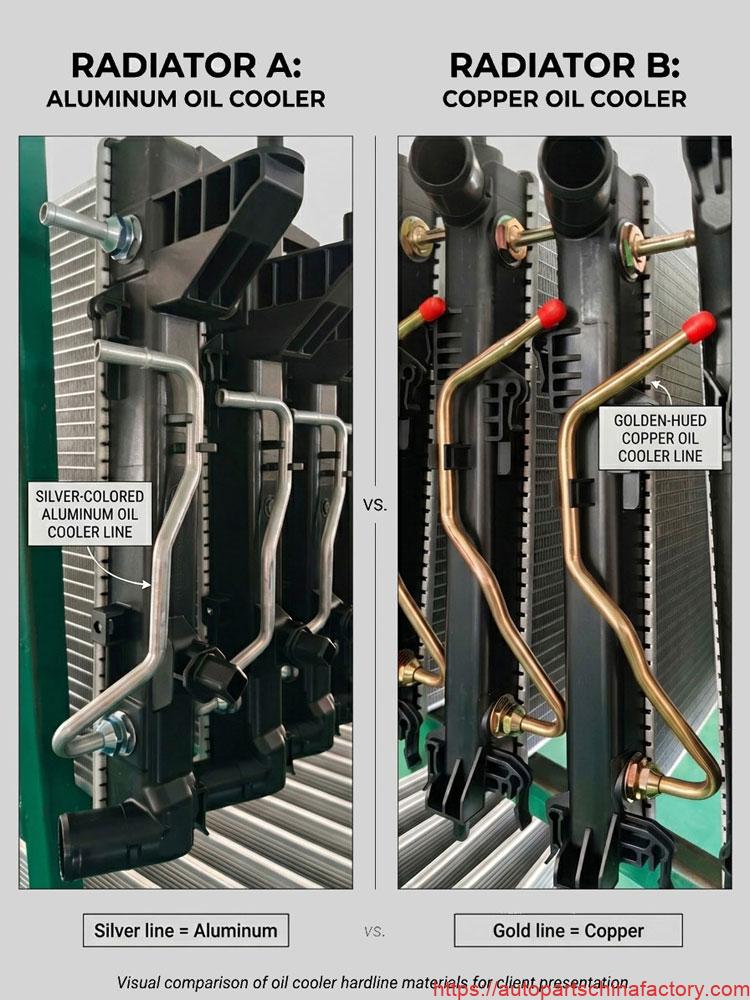
Look closely at the image below. We have lined up two factory-fresh radiator assemblies, identical except for the material used in their integrated oil cooler tubes and fittings. This side-by-side view highlights the distinct differences that procurement managers, retailers, and dedicated DIYers need to consider.
Radiator A: The Modern Standard of Aluminum
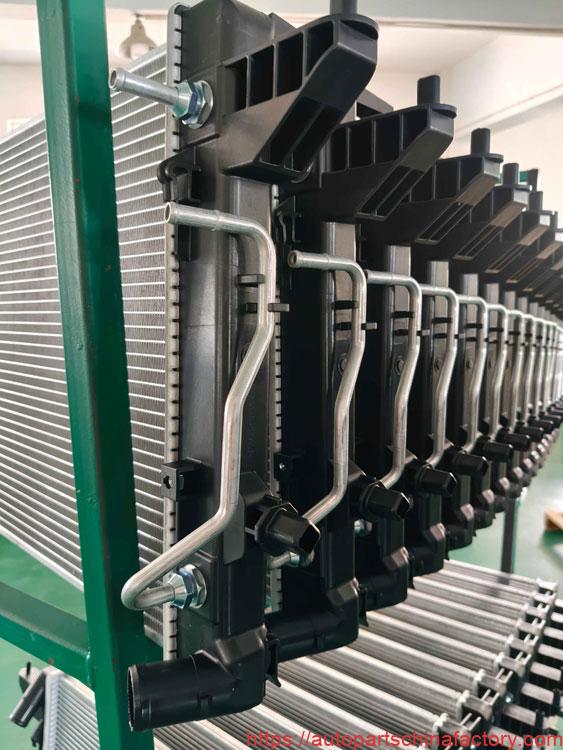
"Silver-Colored Aluminum Oil Cooler Tube"
As seen on the left (labeled Radiator A), this radiator assembly features oil cooler tubes and associated fittings with a clear, silver metallic finish. The entire assembly, including the oil cooler section, is engineered from high-grade aluminum.
Advantages of a Radiator with an Aluminum Oil Cooler
- Weight Reduction: Aluminum is significantly lighter than copper. Modern vehicle manufacturing focuses on reducing overall weight to improve fuel efficiency, making aluminum the material of choice for the modern OE standard.
- Cost-Effectiveness: Generally, aluminum is a more cost-effective material than copper. This translates to a lower per-unit cost without sacrificing structural integrity for standard passenger vehicle applications.
- All-Aluminum OE Standard: The vast majority of standard modern OE radiators have transitioned to an all-aluminum construction.
Radiator B: The Tradition of Copper
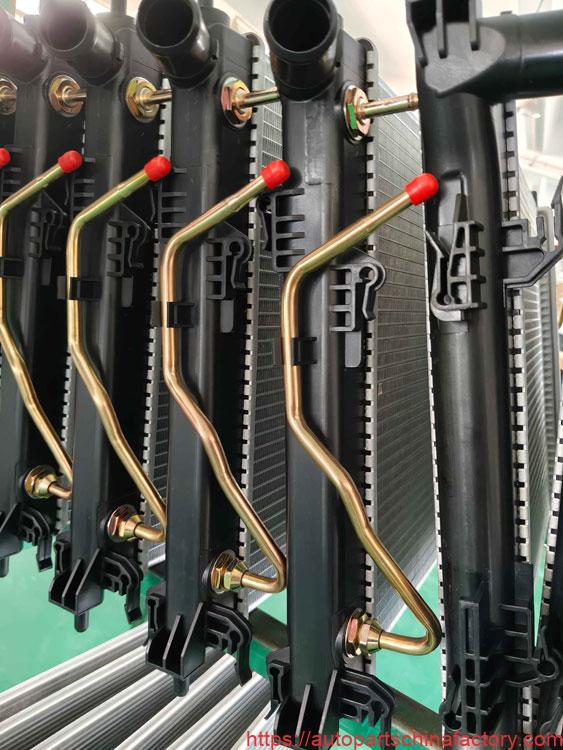
"Golden-Hued Copper Oil Cooler Tube"
On the right (labeled Radiator B), you immediately notice the golden-brown hue of the oil cooler tube, accompanied by the distinct gold-colored brass fittings. This type of construction represents the traditional, premium standard for oil cooler tubes.
Advantages of a Radiator with a Copper Oil Cooler
- Superior Thermal Transfer: Copper has a thermal conductivity rate that is nearly double that of aluminum. When it comes to rapidly moving heat away from transmission oil under extreme stress, a copper-tube oil cooler remains unparalleled.
- Heavy-Duty and Restorations Preferred: For heavy-duty trucks, high-performance towing, and classic restorations, copper's reliability and heat rejection make it the preferred choice, often justifying the premium.
- Durability and Repairability: Copper and brass systems are generally considered more robust and easier to repair (via professional soldering) than their aluminum counterparts.
Material Summary and Application Checklist
| Feature | Aluminum Oil Cooler Tube | Copper Oil Cooler Tube |
| Primary Material | Aluminum | Copper/Brass |
| Tube Color | Silver/Grey | Golden/Brown |
| Thermal Efficiency | Good (Modern Standard) | Superior (Premium) |
| Weight | Light | Heavy |
| Cost | Budget-Friendly | Premium |
| Typical Use Case | Modern Passenger Cars, Modern OE Applications | Heavy-Duty Trucks, Classic Cars, Performance |
Direct Supply from Auto Parts China Factory
As a dedicated manufacturer and supplier of automotive cooling solutions, Auto Parts China Factory understands that different market sectors and projects require different materials.
We maintain a robust inventory and manufacturing capability for both high-efficiency Aluminum and durable Copper-tube radiators, allowing you to meet the diverse needs of your customer base or project. Whether you are stocking parts for a modern vehicle fleet, a specialist repair shop, or sourcing for your own restoration project, we have the precise components you require.
Ready to discuss your bulk procurement needs, retail sourcing, or request a detailed catalog?
Contact us : https://autopartschinafactory.com/contact/