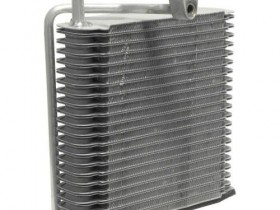
Verdampferkern für BMW 5 & 7 Serie (G30/G38/G12) Verdampfer

Verdampferkern für BMW 5 & 7 Serie (G30/G38/G12)

Verdampferkern für BMW 5 & 7 Serie (G30/G38/G12) APCF-66-28012-side Einführung Die Klimaanlage in Ihrem Auto ist für ein komfortables Fahrerlebnis unerlässlich. Eine kritische, aber oft übersehene Komponente ist der Verdampferkern, der als Wärmetauscher fungiert, ähnlich einem Heizkörper. Im Gegensatz zu einem Kühler, der den Motor kühlt, Der Verdampferkern kühlt die Luft im Passagierraum. Es nutzt ein zirkulierendes Kältemittel, um Wärme und Feuchtigkeit aus der Luft zu absorbieren, Dadurch wird der Innenraum Ihres Autos effektiv kühl und trocken. Wenn Sie bemerken, dass Ihre Klimaanlage keine kalte Luft mehr bläst oder ....
Mehr lesen
Den Verdampfer verstehen: Der unbesungene Coolness-Held Ihres Autos Verdampfer

Den Verdampfer verstehen: Der unbesungene Coolness-Held Ihres Autos

When the summer heat hits, there's nothing quite like stepping into a cool, air-conditioned car. But have you ever wondered how that refreshing blast of cold air is actually generated? The unsung hero behind your vehicle's air conditioning system is a crucial component called the evaporator. In this post, we'll delve into the structure, function, and mechanical principles of the automotive evaporator. We'll also touch upon its supply chain, import factories, and key manufacturers, providing a comprehensive overview for car enthusiasts and industry professionals alike. What is an Evaporator? Looking at the images provided , you can see the evaporator...
Mehr lesen
Stacked vs. Manifold Evaporators: Which is Best for Your Car's AC? Verdampfer

Stacked vs. Manifold Evaporators: Which is Best for Your Car’s AC?

The key differences between stacked evaporators and manifold evaporators in car air conditioning systems lie in their structural design, refrigerant flow, and resulting performance characteristics. Stacked Evaporator Stacked-Evaporator Structural Characteristics: A stacked evaporator typically consists of multiple flat, layered heat exchange passages (or primary heat sinks). Heat exchange fins are placed between adjacent layers to increase the heat transfer surface area. The refrigerant flows through these stacked passages either in series or in parallel, connected by ports. Internal structures like flow equalization holes, flow restrictor fins, or internal fins might be present to ensure even refrigerant distribution. Funktionsprinzip: The...
Mehr lesen